


The difference between academic research and scientific research
24 June 2024
The difference between academic research and scientific research

Academic research and scientific research are essential approaches for expanding knowledge, solving problems, and supporting innovation. While both aim to generate valuable insights, they differ in their objectives, methodologies, and areas of application.


What Is Academic Research?
Academic research is a structured investigation conducted within educational and scholarly environments to explore topics, develop knowledge, and contribute to existing studies. It focuses on analyzing concepts, building theories, and providing new perspectives across various disciplines.

Academic research covers different fields including business, education, humanities, social sciences, and technology through various research methods such as:

Qualitative Research.

Quantitative Research.

Case Studies and Literature Reviews.

Data Analysis and Theoretical Studies.


What Is Scientific Research?
Scientific research is a systematic process based on observation, experimentation, and evidence to discover facts, test hypotheses, and develop scientific solutions. It mainly focuses on measurable results and practical applications.

Scientific research commonly includes:

Experimental Studies.

Scientific Observation and Measurement.

Hypothesis Testing.

Data Collection and Analysis.


Key Differences Between Academic & Scientific Research
Although both types of research aim to increase knowledge, they differ in their focus and approach:

Academic research focuses on exploring ideas, theories, and knowledge development across various disciplines.

Scientific research focuses on experiments, evidence, and discovering measurable facts.

Academic research may use theoretical and analytical approaches, while scientific research relies heavily on testing and experimentation.


Importance of Research
Both academic and scientific research contribute to progress by supporting innovation, improving decision-making, and providing solutions to real-world challenges.

Research helps universities, organizations, and industries develop new knowledge, improve practices, and create sustainable solutions for the future.

A new vision for distinguished education
22 June 2025
A new vision for distinguished education

Education is continuously evolving to meet the challenges of a rapidly changing world. A new vision for distinguished education focuses on creating innovative learning environments that combine academic excellence, practical experience, technology, and lifelong development.


What Is Distinguished Education?
Distinguished education goes beyond traditional knowledge delivery by developing learners' skills, creativity, and ability to solve real-world challenges. It focuses on:

Critical Thinking and Problem-Solving Skills.

Practical Application of Knowledge.

Innovation and Creativity.

Leadership and Communication Skills.

Lifelong Learning and Professional Development.


Technology & Innovation in Education
Modern education integrates advanced technologies to enhance learning experiences and provide flexible educational opportunities through:

Artificial Intelligence in Learning.

Digital Learning Platforms.

Online and Hybrid Education.

Data-Driven Learning Solutions.

Virtual Learning Environments.


Developing Future-Ready Skills
A new educational vision prepares students and professionals with the skills required for future careers and leadership roles, including:

Strategic Thinking and Leadership.

Digital Skills and Technology Awareness.

Entrepreneurship and Innovation.

Data Analysis and Decision-Making.

Adaptability and Continuous Improvement.


Education & Industry Collaboration
Distinguished education creates strong connections between academic institutions and industry through:

Professional Training Programs.

Internships and Practical Projects.

Industry Partnerships.

Real-World Learning Experiences.


Global Learning Environment
Modern educational institutions promote international collaboration and knowledge exchange by providing:

International Learning Opportunities.

Cultural Diversity and Collaboration.

Global Knowledge Sharing.

Preparation for International Careers.


The Future of Education
The future of education depends on institutions that embrace innovation, research, and continuous development. Distinguished education creates an ecosystem where learners can achieve excellence, develop leadership capabilities, and contribute to society.

LUBM Celebrates 100 Years of Academic Excellence
12 May 2026
LUBM Celebrates 100 Years of Academic Excellence

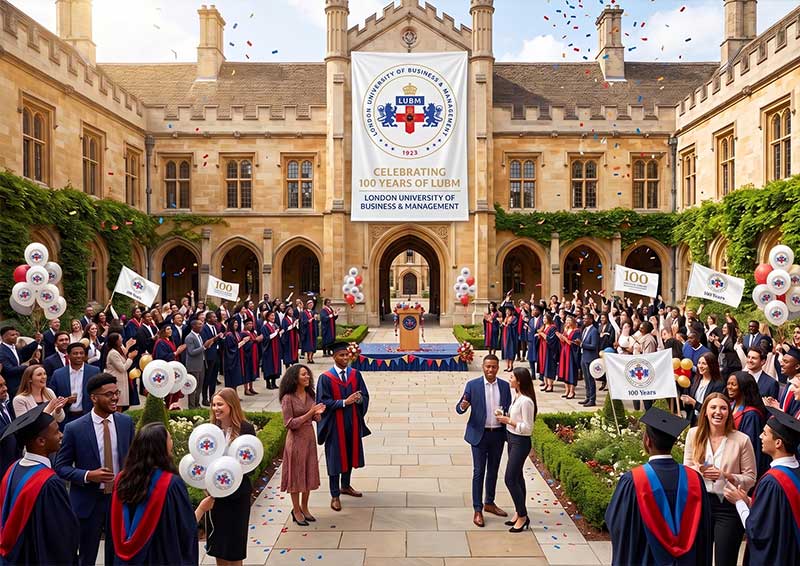
London University of Business & Management (LUBM) proudly celebrated its 100th Anniversary, marking a century of excellence in higher education, leadership development, and academic innovation.

The centennial celebration brought together distinguished academic leaders, partners, alumni, students, and guests to honor the University's remarkable journey and its lasting contribution to business education and professional development.

During the celebration, LUBM highlighted its most significant achievements over the past century, showcasing its commitment to academic excellence, international collaboration, and the continuous development of programs that meet the demands of today's rapidly changing global economy.

University leaders emphasized that the centenary is not only a celebration of the past but also the beginning of a new era focused on innovation, artificial intelligence, digital transformation, and global partnerships. LUBM remains dedicated to preparing future leaders with the knowledge, skills, and vision needed to create meaningful impact across industries worldwide.

As the University embarks on its next century, it reaffirms its mission to inspire excellence, empower professionals, and shape the future of business, leadership, and organizational development.

100 Years of Excellence. Inspiring the Future.

the conditions to be fulfilled by the researcher
14 May 2026
the conditions to be fulfilled by the researcher

A successful researcher requires a combination of knowledge, skills, and professional qualities to conduct effective research and contribute valuable findings. Researchers must follow ethical standards, apply appropriate methodologies, and demonstrate commitment to advancing knowledge.


What Are the Conditions to Be Fulfilled by the Researcher?
A researcher should possess several essential qualities and capabilities to ensure the quality and reliability of research outcomes, including:

Strong Knowledge of the Research Field.

Ability to Define Research Problems Clearly.

Understanding of Research Methodologies and Techniques.

Critical Thinking and Analytical Skills.

Ability to Collect, Analyze, and Interpret Data.


Professional & Ethical Responsibilities
Researchers must follow professional and ethical principles throughout the research process, including:

Maintaining Research Integrity and Accuracy.

Respecting Ethical Guidelines and Standards.

Ensuring Objectivity and Avoiding Bias.

Properly Referencing Sources and Previous Studies.

Protecting the Rights and Privacy of Participants.


Research Skills & Personal Qualities
Effective researchers develop personal and professional skills that support successful research activities, such as:

Curiosity and Continuous Learning.

Patience and Persistence.

Problem-Solving Ability.

Creativity and Innovation.

Effective Communication Skills.


Commitment to Research Excellence
A qualified researcher continuously improves knowledge, adopts modern research tools, and contributes to the development of science and society through high-quality research.

Celebrating 100 Years of Excellence at LUBM
14 May 2026
Celebrating 100 Years of Excellence at LUBM

London University of Business & Management (LUBM) proudly celebrates its 100th Anniversary, marking a century of academic excellence, innovation, and leadership development.

This historic milestone reflects one hundred years of dedication to empowering students, professionals, and future leaders through world-class education, research, and continuous innovation. Throughout its journey, LUBM has remained committed to delivering internationally recognized programs that combine academic excellence with practical industry experience.

The centenary celebration brought together distinguished academic leaders, alumni, partners, and students to honor the University's remarkable legacy and its contribution to business education, leadership, and organizational development.

As LUBM enters its second century, the University reaffirms its vision of shaping the next generation of global leaders by integrating business, artificial intelligence, innovation, and organizational excellence into every aspect of learning.

100 Years of Excellence. One Vision for the Future.